Digital marketing is often described as a collection of online channels—search, social media, email, ads. That description is incomplete. In practice, digital marketing is an interconnected system that helps organizations understand demand, communicate value, and build relationships across digital environments. It blends strategy, technology, content, data, and human judgment into a continuous feedback loop.
What makes digital marketing distinct today is not the presence of digital tools, but the way audiences discover information, evaluate credibility, and make decisions in environments shaped by algorithms, platforms, and increasingly, artificial intelligence. Understanding this system—how its parts support each other and where its limits lie—is essential for anyone trying to use digital marketing responsibly and effectively.
This article explains digital marketing as a complete ecosystem. It avoids shortcuts and tactics in isolation, and instead focuses on how strategy, channels, technology, and trust fit together over time.
What Digital Marketing Really Means Today
At its core, digital marketing is the practice of reaching, engaging, and serving people through digital channels in ways that align with their intent and context.
Unlike traditional marketing, digital marketing operates in environments where:
- Attention is fragmented across platforms
- Discovery is mediated by algorithms
- Feedback is continuous and measurable
- Content competes not only with competitors, but with everything else on the internet
Digital marketing is not limited to promotion. It includes how products are explained, how questions are answered, how trust is built, and how experiences are improved after the first interaction. The goal is not visibility alone, but relevance—being present when a genuine need exists and responding appropriately.
Strategy: The Foundation Beneath Every Channel
Digital marketing begins with strategy, not channels.
A sound digital marketing strategy clarifies:
- Who the audience is (and who it is not)
- What problems or needs are being addressed
- Where and how people seek information
- What role each channel should play
Without this clarity, activity becomes fragmented—content without purpose, ads without alignment, data without insight.
Strategy also involves prioritization. Most organizations cannot invest equally in every channel. Effective digital marketing focuses on a small number of channels that match the audience’s behavior and the organization’s capacity to execute well.
Importantly, strategy is iterative. As platforms change and audiences evolve, strategy must be revisited. Digital marketing rewards organizations that learn continuously rather than those that chase fixed formulas.
Content Marketing: Building Understanding Before Demand
Content marketing strategy is the practice of creating useful, relevant information that helps people understand a topic, evaluate options, or solve problems.
It is not limited to blogs or social posts. Content includes:
- Educational articles
- Product explanations
- Guides and comparisons
- Visual and interactive formats
- Responses to common questions
The value of content lies in its ability to reduce uncertainty. People turn to content when they are learning, researching, or validating decisions. Well-designed content respects that moment by being accurate, clear, and honest about limitations.
In a digital ecosystem, content also supports other channels:
- Search engines use content to assess relevance
- Social platforms use content signals to determine distribution
- Email relies on content to maintain engagement
- Paid campaigns perform better when backed by credible content
Content marketing works over time. Its returns are cumulative, not immediate, and depend on consistency and quality rather than volume.
Search Engine Optimization as an Information Discipline
Search engine optimization (SEO) is often misunderstood as a technical or keyword-driven activity. In reality, SEO is about structuring information so that it can be discovered, understood, and trusted.
On-Page SEO
On-page SEO focuses on how content is written and organized:
- Clear explanations of topics
- Logical structure and headings
- Accurate language and intent matching
- Context that helps both users and systems understand relevance
Good on-page SEO improves comprehension, not just rankings.
Technical SEO
Technical SEO ensures that content is accessible:
- Pages load efficiently
- Sites work across devices
- Navigation is clear
- Search engines can crawl and interpret pages correctly
Technical issues do not improve content, but they can prevent good content from being seen.
Off-Page SEO
Off-page SEO reflects external trust signals:
- References from other credible sites
- Mentions and citations
- Brand recognition across the web
These signals are earned gradually and cannot be reliably manufactured without value.
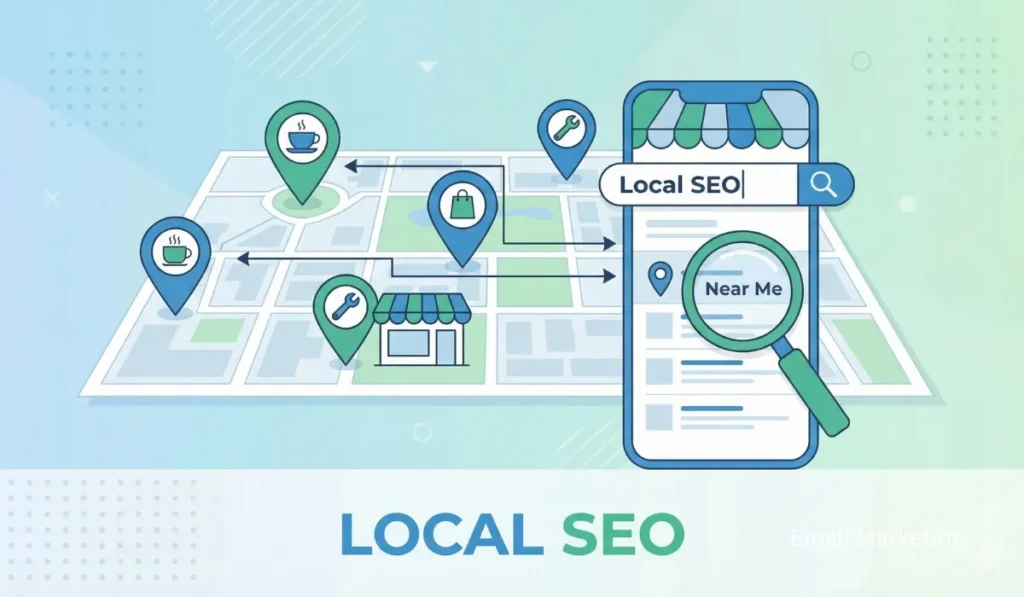
Local SEO
Local SEO helps organizations appear when intent is location-specific:
- Accurate business information
- Contextual relevance
- Consistency across platforms
Local SEO is especially important for services, retail, and community-based businesses.
SEO today is less about ranking tricks and more about aligning content with how people search and how systems evaluate credibility.
Paid Advertising: Controlled Reach with Clear Trade-Offs
Paid digital advertising allows organizations to reach specific audiences with speed and control. It includes:
- Search ads
- Display and native ads
- Social media advertising
- Video advertising
Paid channels are effective for:
- Time-sensitive visibility
- Testing messaging
- Supporting launches or campaigns
However, paid advertising (PPC) is not a substitute for strategy or content. Its performance depends on:
- Audience targeting quality
- Message clarity
- Landing page experience
- Ongoing optimization
Paid media amplifies what already exists. If the underlying offer or explanation is weak, increased visibility will not compensate.
Social Media: Platforms, Algorithms, and Attention
Social media marketing is shaped by platform-specific algorithms that prioritize engagement, relevance, and retention.
Each platform operates differently:
- Some reward consistency
- Others emphasize novelty or interaction
- Most favor content that keeps users within the platform
Social media is not primarily a distribution channel for links. It is an environment where brands are observed rather than actively sought out.
Effective social media marketing focuses on:
- Understanding platform norms
- Participating in conversations rather than broadcasting
- Maintaining coherence across time
Social media rarely converts in isolation. Its value lies in awareness, familiarity, and reinforcement of trust.
Email and Lifecycle Marketing: Sustained Relationships
Email marketing remains one of the most reliable digital channels because it operates in a permission-based environment.
Lifecycle marketing uses email and related touchpoints to:
- Welcome new users
- Educate over time
- Support usage and retention
- Communicate changes or updates
The effectiveness of email depends on relevance and respect. Overuse, generic messaging, or poor timing erodes trust quickly.
Email works best when integrated with content, product experience, and customer support—not as a standalone promotional tool.
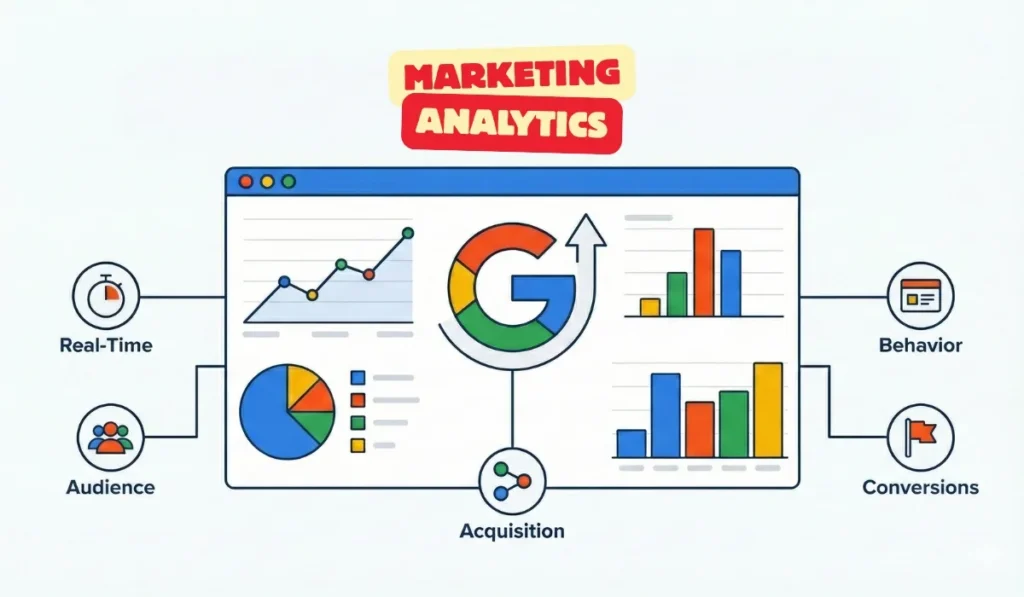
Analytics, Measurement, and Attribution
Digital marketing analytics & measurement produces data at every interaction. Analytics helps interpret that data, but measurement is not the same as understanding.
Good analytics focuses on:
- Patterns, not isolated metrics
- Trends over time
- Relationships between channels
Attribution—understanding which efforts influenced outcomes—is inherently complex. Most decisions involve multiple touchpoints. Simple attribution models can misrepresent reality if taken too literally.
Measurement should inform learning, not justify activity.
Conversion Rate Optimization: Improving What Already Exists
Conversion rate optimization (CRO) examines how users move through digital experiences and where friction occurs.
CRO focuses on:
- Clarity of information
- Ease of navigation
- Alignment with user expectations
Small improvements in usability often produce more impact than increased traffic. CRO reinforces the idea that digital marketing is not only about acquisition, but also about experience.
Marketing Technology and Automation: Infrastructure, Not Magic
Marketing technology supports execution and coordination. Marketing automation tools helps manage scale, consistency, and timing.
However, tools do not create strategy. They execute it.
Responsible use of marketing technology requires:
- Clear objectives
- Clean data
- Human oversight
Over-automation without understanding leads to noise rather than efficiency.
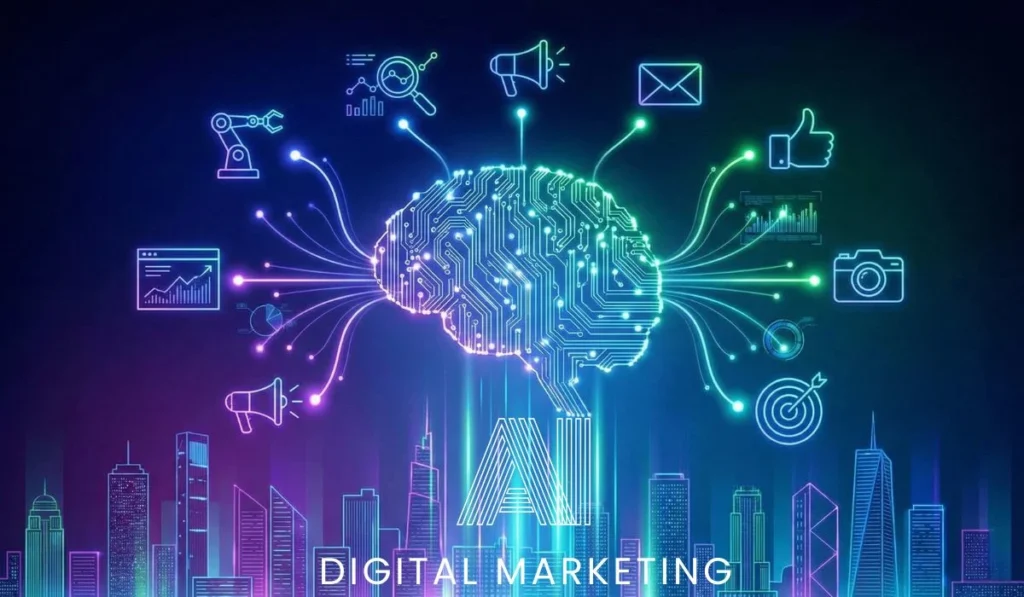
How Artificial Intelligence Is Reshaping Digital Marketing
Artificial intelligence has become foundational to how digital marketing systems operate. It influences discovery, targeting, creation, and measurement.
AI in Search and Discovery
Search engines increasingly use AI to summarize information directly in results through features such as AI-generated overviews. These experiences reduce the need for users to click multiple links and shift the role of content from attracting traffic to providing reliable source material.
This has led to:
- Generative search experiences where answers are synthesized
- Zero-click interactions where visibility matters more than visits
- Answer Engine Optimization (AEO), which focuses on clarity, structure, and factual reliability
Large Language Models
Large language models process vast amounts of text to generate responses, summaries, and suggestions. In marketing, they assist with:
- Drafting content
- Analyzing themes
- Interpreting customer feedback
They do not understand intent or context in the human sense and require guidance and verification.
Agentic AI Systems
Agentic systems can perform sequences of tasks—such as adjusting bids or testing variations—based on predefined goals. These systems increase efficiency but operate within the boundaries set by humans.
AI in Advertising and Analytics
AI optimizes ad delivery, audience segmentation, and performance prediction. While powerful, these systems depend on quality data and ethical constraints.
AI enhances decision-making but does not replace accountability. Human judgment remains essential to ensure accuracy, fairness, and alignment with real-world outcomes.
Common Misunderstandings About Digital Marketing
Several assumptions limit effectiveness:
- That digital marketing is primarily about growth rather than service
- That more channels automatically mean better results
- That tools can replace understanding
- That algorithms reward manipulation over clarity
Digital marketing works best when treated as a discipline grounded in communication, not shortcuts.
Ethics, Privacy, and Trust
Digital marketing operates in environments where data, consent, and transparency matter.
Responsible practices include:
- Clear data usage policies
- Respect for user preferences
- Avoidance of deceptive design or messaging
Trust is cumulative and fragile. Short-term gains achieved through manipulation often result in long-term erosion of credibility.
The Limits of Digital Marketing
Digital marketing cannot:
- Compensate for a weak product
- Eliminate all uncertainty
- Guarantee outcomes
It operates within constraints of attention, competition, and platform control. Recognizing these limits leads to more realistic expectations and better decisions.
A Long-Term Perspective
Digital marketing is not a destination or a checklist. It is an evolving practice shaped by technology, behavior, and culture.
Organizations that succeed in digital marketing tend to:
- Invest in understanding before execution
- Treat channels as interconnected
- Use technology as support, not substitution
- Value trust as a strategic asset
As platforms change and AI becomes more integrated, the fundamentals remain stable: clarity, relevance, and respect for the audience.
Understanding digital marketing as a system—rather than a set of tactics—allows it to be applied thoughtfully, adapted responsibly, and sustained over time.