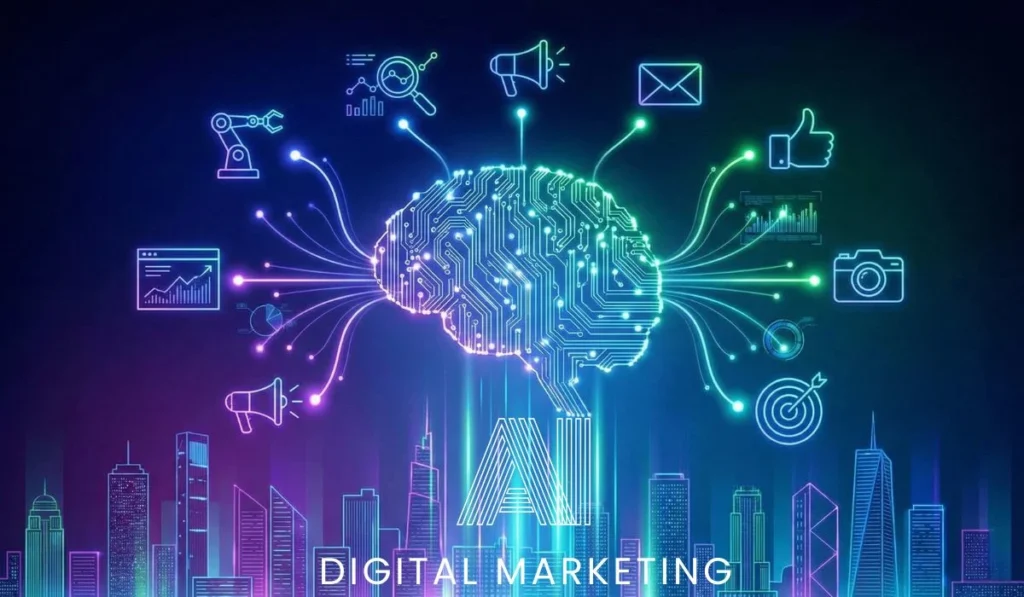
Using AI in digital marketing in 2026 does not mean handing strategy to machines, automating judgment, or chasing the latest tools. It means designing systems where artificial intelligence supports human decision-making across channels, under real constraints, and within a clearly defined marketing purpose.
AI has quietly become part of the infrastructure behind modern marketing. It influences how search results are generated, how ads are priced and delivered, how content is evaluated, and how performance data is modeled. Most marketers already “use AI” indirectly—often without naming it. The challenge in 2026 is not adoption, but understanding where AI adds value, where it does not, and how it fits into the wider digital marketing framework.
This article explains how AI is actually used in digital marketing today: responsibly, realistically, and system-wide.
What “Using AI in Digital Marketing” Actually Means in 2026
In practical terms, using AI in digital marketing means relying on machine-learned systems to:
- Detect patterns humans cannot see at scale
- Assist decisions under uncertainty
- Adapt execution within predefined boundaries
- Summarize, classify, or predict outcomes based on historical data
AI does not define goals. It does not understand brand context. It does not replace judgment, ethics, or accountability.
In 2026, AI sits beneath marketing activities rather than on top of them. It powers recommendation engines, bidding systems, spam detection, content classification, and predictive models. Marketers interact with its outputs—not its internal reasoning.
Understanding this distinction is critical. AI is not a marketing channel. It is an enabling layer across the digital marketing ecosystem.
AI, Automation, Algorithms, and LLMs: Clearing the Confusion
Much of the confusion around AI in marketing comes from treating different systems as the same thing. They are not.
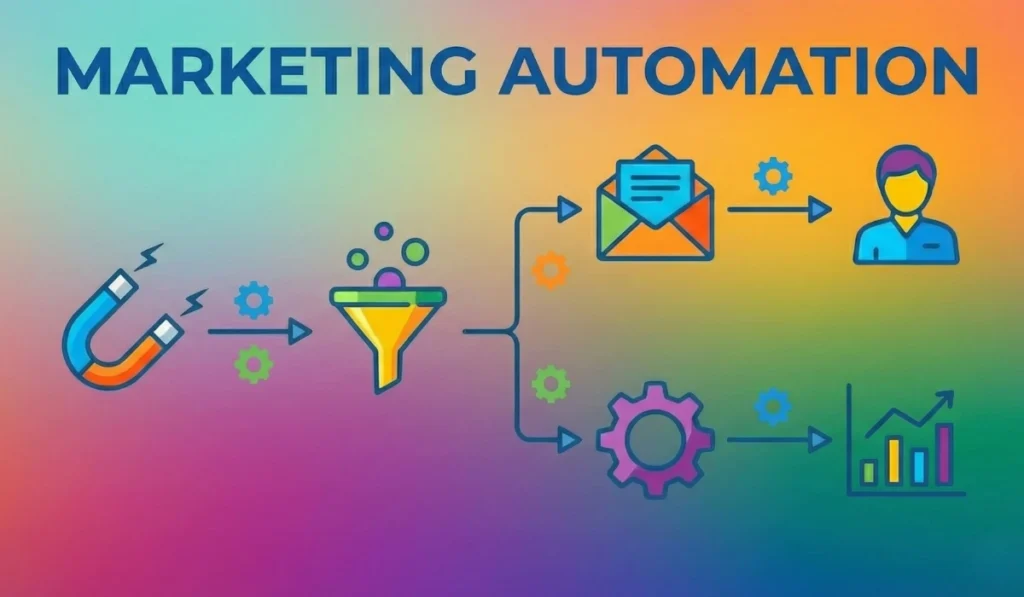
Automation
Automation follows predefined rules:
- If X happens, do Y
- Trigger-based workflows
- No learning, no adaptation
Automation executes decisions that humans already made.
Algorithms
Algorithms are structured logic systems:
- Ranking formulas
- Scoring models
- Eligibility rules
They are deterministic, even when complex.
Artificial Intelligence (AI)
AI refers to systems that:
- Learn from data
- Adapt outputs based on patterns
- Improve predictions over time
AI introduces probability, not certainty.
Large Language Models (LLMs)
LLMs are a subset of AI designed to:
- Predict language sequences
- Summarize, explain, and reframe text
- Assist interpretation, not truth
They do not “know” facts. They generate plausible language based on training data.
In digital marketing, these systems overlap—but they serve different roles. Treating them as interchangeable leads to misuse and misplaced trust.
AI as Decision Support, Not Strategy
AI performs best when the problem is clearly defined and the success criteria are explicit. It performs poorly when goals are vague, ethical judgment is required, or context is missing.
In 2026, responsible AI use in marketing follows a consistent pattern:
- Humans define objectives and constraints
- AI processes signals and probabilities
- Humans interpret outputs and decide actions
- Systems are monitored and adjusted
This human-in-the-loop model is not optional. Without it, AI amplifies errors faster than it delivers value.
How AI Is Used Across Core Areas of Digital Marketing
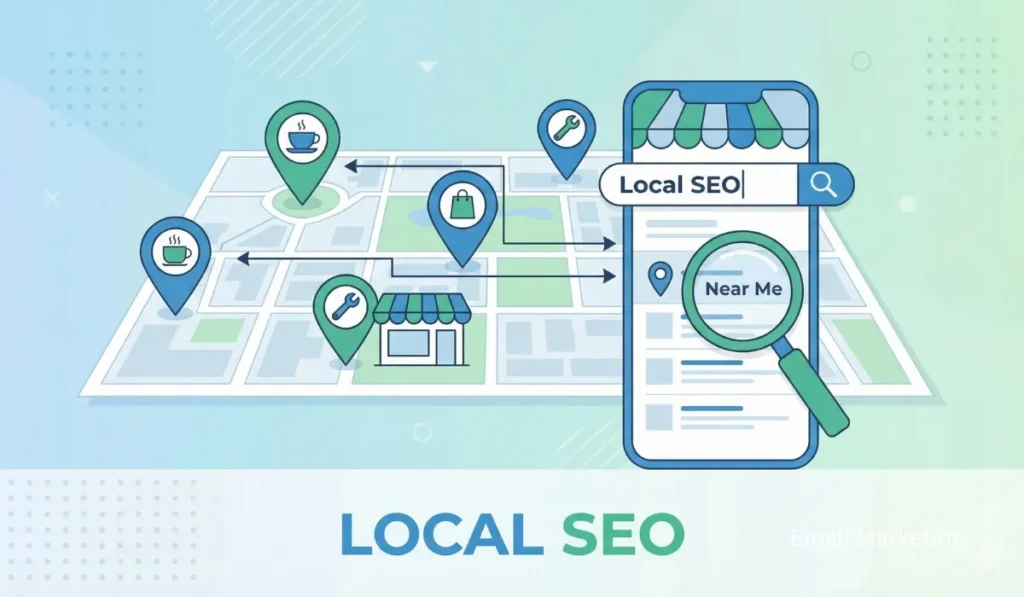
AI in SEO, AEO, and Search Discovery
Search in 2026 is no longer just a list of links. AI-generated summaries, AI Overviews, and zero-click answers are now part of mainstream discovery—especially in Google Search.
These systems rely on AI to:
- Interpret search intent
- Synthesize information across sources
- Evaluate clarity, structure, and trustworthiness
For marketers, this changes the goal. Optimization is no longer about signaling relevance alone. It is about being understandable to systems that summarize content for users.
AI supports SEO and Answer Engine Optimization (AEO) by:
- Identifying content gaps and ambiguity
- Evaluating topical coverage
- Highlighting inconsistencies or thin explanations
What AI cannot do is guarantee visibility, rankings, or traffic. Discovery is mediated by platform-controlled systems, not marketer intent.
AI in Content Creation and Evaluation
AI assists content teams by:
- Structuring outlines
- Rewriting for clarity
- Summarizing long material
- Checking tone consistency
In 2026, its most valuable role is evaluation, not generation. AI helps teams assess whether content is:
- Clear to non-experts
- Internally consistent
- Redundant or incomplete
However, AI cannot:
- Create original insight
- Replace lived experience
- Validate factual accuracy without external checks
Content quality still depends on human expertise and editorial accountability.
AI in Paid Media Targeting and Optimization
Paid media platforms rely heavily on AI systems to:
- Predict conversion likelihood
- Allocate budgets dynamically
- Adjust bids in real time
Marketers influence outcomes indirectly by:
- Defining audiences and exclusions
- Supplying high-quality conversion signals
- Setting performance constraints
What has changed in 2026 is control. AI systems optimize toward platform-defined objectives. Transparency into “why” decisions are made remains limited.
Human oversight is essential to prevent:
- Over-optimization toward short-term metrics
- Brand misalignment
- Audience erosion through excessive automation
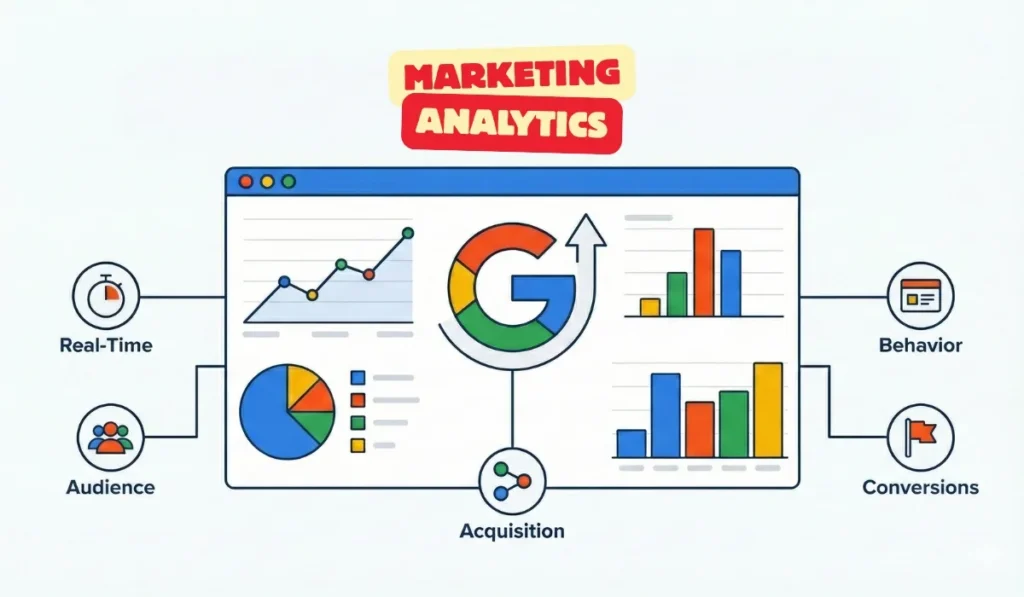
AI in Analytics, Forecasting, and Modeled Data
With increasing privacy constraints and signal loss, analytics in 2026 relies heavily on modeled data. AI supports this shift by:
- Estimating missing signals
- Forecasting trends under uncertainty
- Identifying anomalies and patterns
These outputs are directional, not definitive.
AI does not restore perfect attribution. It helps marketers reason probabilistically rather than react to incomplete dashboards.
AI in Personalization and Lifecycle Marketing
Personalization powered by AI focuses on:
- Timing
- Relevance
- Message sequencing
Not hyper-individualization.
AI helps decide:
- Which content to surface
- When to engage
- When not to interrupt
Ethical use requires restraint. Over-personalization can erode trust faster than generic messaging.
Where AI Commonly Fails or Misleads Marketers
AI’s limitations are structural, not temporary.
Common failure points include:
- Hallucinated or confidently incorrect outputs
- Bias embedded in training data
- Reinforcement of past assumptions
- Optimization toward measurable but meaningless metrics
AI systems do not understand consequences. They optimize patterns, not outcomes.
Blind trust is the most common misuse of AI in marketing.
AI, Search, and Generative Discovery: What Marketers Need to Know
AI-driven search experiences summarize content rather than directing users to it. Visibility depends on:
- Clear structure
- Neutral, factual language
- Demonstrated expertise
- Consistent topical coverage
AI does not reward clever optimization tactics. It rewards understandability.
Traffic is no longer guaranteed. Influence and visibility are increasingly decoupled from clicks.
Responsibility as a Competitive Advantage
Responsible AI use is not about caution for its own sake. It protects:
- Brand credibility
- Customer trust
- Long-term performance
Responsible marketing teams:
- Disclose AI assistance where relevant
- Avoid deceptive personalization
- Respect consent and data boundaries
- Maintain human accountability
In 2026, trust is harder to earn and easier to lose. AI amplifies both.
What AI Can and Cannot Do in Digital Marketing
AI can:
- Assist decisions at scale
- Detect patterns across large datasets
- Improve operational efficiency
AI cannot:
- Define strategy
- Understand ethics
- Replace human responsibility
Recognizing this boundary is essential to sustainable use.
AI Within the Digital Marketing System
AI creates value only when integrated across channels—search, content, paid media, analytics, and lifecycle marketing—under a shared strategic framework. Isolated AI usage produces noise, not insight.
When treated as infrastructure rather than a solution, AI helps marketers operate more clearly within the structure of modern digital marketing.
Conclusion: Using AI Without Losing the Plot
AI is neither a shortcut nor a threat to digital marketing. It is a probabilistic support layer embedded in platforms, data systems, and discovery engines.
In 2026, effective marketers use AI to:
- Clarify decisions
- Manage uncertainty
- Scale judgment without surrendering it
AI only works when humans remain accountable—and when it is aligned with how different digital marketing elements connect.
Understanding this balance is what separates responsible use from costly misuse.