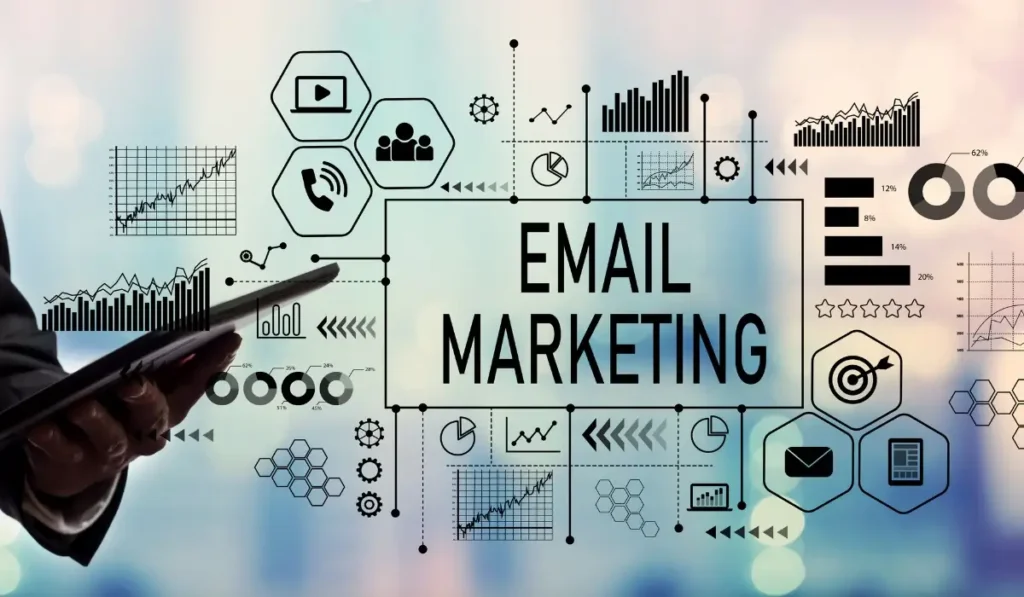
Email marketing survives every platform shift, algorithm update, and trend cycle for one reason:
it is not powered by reach—it is powered by permission.
Yet most email programs fail not because email is outdated, but because it is misunderstood. Email is often treated like a quieter version of social media or a cheaper version of paid ads. In reality, it works by entirely different rules.
Within the broader digital marketing strategy, email functions as a lifecycle channel—one designed to sustain relevance, trust, and continuity over time, not to broadcast messages at scale.
Email Marketing Is a Relationship System, Not a Distribution Hack
Email marketing doesn’t exist to push messages.
It exists to maintain a relationship over time—one interaction at a time.
At its core, email is a permission-based communication system where attention is granted deliberately, not captured accidentally. Unlike feeds or ads, email doesn’t rely on interruption or algorithms. It relies on continued relevance.
Email marketing is not:
- A megaphone for announcements
- A shortcut around declining social reach
- A low-cost alternative to paid media
- A channel where frequency equals effectiveness
Email marketing is:
- A long-term conversation with known users
- A trust-sensitive channel where misuse has lasting consequences
- A lifecycle layer that supports awareness, decision-making, and retention
- A record of how a brand treats attention when no algorithm is forcing visibility
Where other channels fight to earn attention, email works only after attention has already been granted—and only continues working as long as that trust is respected.
That’s why email doesn’t fail suddenly.
It erodes quietly, one irrelevant message at a time.
Thinking in Lifecycles Instead of Campaigns
Most email strategies break down because they are built around campaigns, not people.
Lifecycle thinking starts from a different assumption:
every subscriber exists in a stage, not a list.
Email effectiveness depends on recognizing where someone is—and adjusting communication accordingly.
The Core Email Lifecycle Stages
1. Entry and Expectation Formation
The first emails do more than introduce a brand.
They establish rules.
- Why was the email address shared?
- What type of communication was implied?
- How often does “often” actually mean?
Trust doesn’t begin with content quality.
It begins with expectation alignment.
When early emails violate expectations, disengagement starts immediately—even if metrics don’t show it yet.
2. Early Engagement and Value Validation
At this stage, subscribers are subconsciously evaluating one thing:
“Was this worth it?”
Here, email should:
- Reduce uncertainty
- Deliver on the original promise
- Avoid premature selling
Early engagement isn’t about clever subject lines.
It’s about relevance that feels obvious, not forced.
3. Ongoing Relationship Maintenance
This is where most email programs lose discipline.
The goal here is not constant interaction—it’s familiarity without fatigue.
Effective lifecycle email during this phase:
- Maintains a predictable rhythm
- Balances utility with brand presence
- Respects silence as a signal, not a failure
Email at this stage should feel expected, not intrusive.
4. Conversion as Confirmation, Not Pressure
When email contributes to conversion, its role shifts.
It stops persuading and starts confirming:
- Reinforcing confidence
- Reducing friction
- Validating decisions
This is why transactional emails often outperform promotional ones.
They operate in moments of maximum trust.
Abusing this phase with aggressive upselling damages more than revenue—it damages credibility.
5. Retention, Dormancy, and Exit
Not all relationships last—and email marketing must accept that.
Lifecycle-aware programs:
- Reduce frequency during inactivity
- Recognize disengagement early
- Allow subscribers to leave cleanly
Trying to “win back” everyone usually accelerates list decay.
Sometimes, restraint preserves long-term brand trust better than reactivation attempts.
Permission and Trust: Email’s Fragile Advantage
Email works because it operates under an invisible contract:
“You can reach me—as long as you respect my context.”
Permission is not permanent.
It is re-evaluated with every send.
Trust erodes when:
- Emails arrive without relevance
- Volume increases without justification
- Messaging serves internal goals over subscriber needs
- Automation replaces judgment
Unsubscribes are honest feedback.
Inbox filtering is silent rejection.
Why Timing Beats Frequency Every Time
Email success is rarely about how much you send.
It’s about when and why.
Lifecycle-aware timing considers:
- Behavioral signals
- Stage transitions
- Attention saturation
- Real-world context
One well-timed email can outperform a full sequence sent out of habit.
Frequency is visible.
Timing is felt.
Email Compared to Other Channels: Different Roles, Different Rules
Email vs Social Media
- Social platforms discover attention
- Email sustains attention
- Social reach is rented
- Email trust is earned
Social feeds are volatile.
Email relationships are cumulative.
Email vs Paid Media
- Paid media creates momentum
- Email compounds value
- Ads accelerate entry
- Email determines longevity
Paid channels bring people in.
Email decides whether they stay.
Why Email Marketing Breaks When It’s Abused
Email doesn’t stop working because technology changes.
It stops working because respect disappears.
Common failure patterns include:
- Treating subscribers as leads instead of humans
- Sending because the calendar says so
- Confusing automation with personalization
- Optimizing for short-term clicks over long-term trust
Email decay is slow, silent, and difficult to reverse.
Email’s Role in a Sustainable Digital Marketing System
Within a healthy digital marketing ecosystem, email acts as a stabilizer.
It:
- Reduces platform dependency
- Preserves audience memory
- Translates attention into loyalty
- Creates continuity across channels
Email doesn’t replace SEO, social, or paid media.
It connects them across time.
The Long View: Email as Reputation Infrastructure
At scale, email marketing becomes more than a channel.
It becomes:
- A record of restraint
- A signal of brand maturity
- A reflection of how a company treats attention when no algorithm is watching
The strongest email programs don’t feel aggressive or clever.
They feel considered.
And within any serious digital marketing strategy, that consideration is what keeps permission alive long after reach fades.