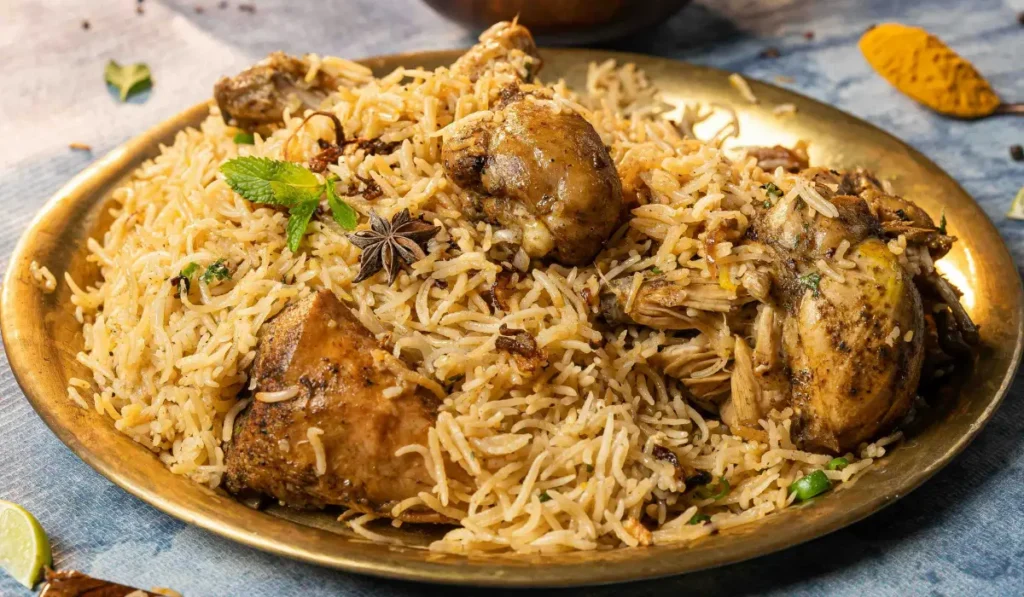
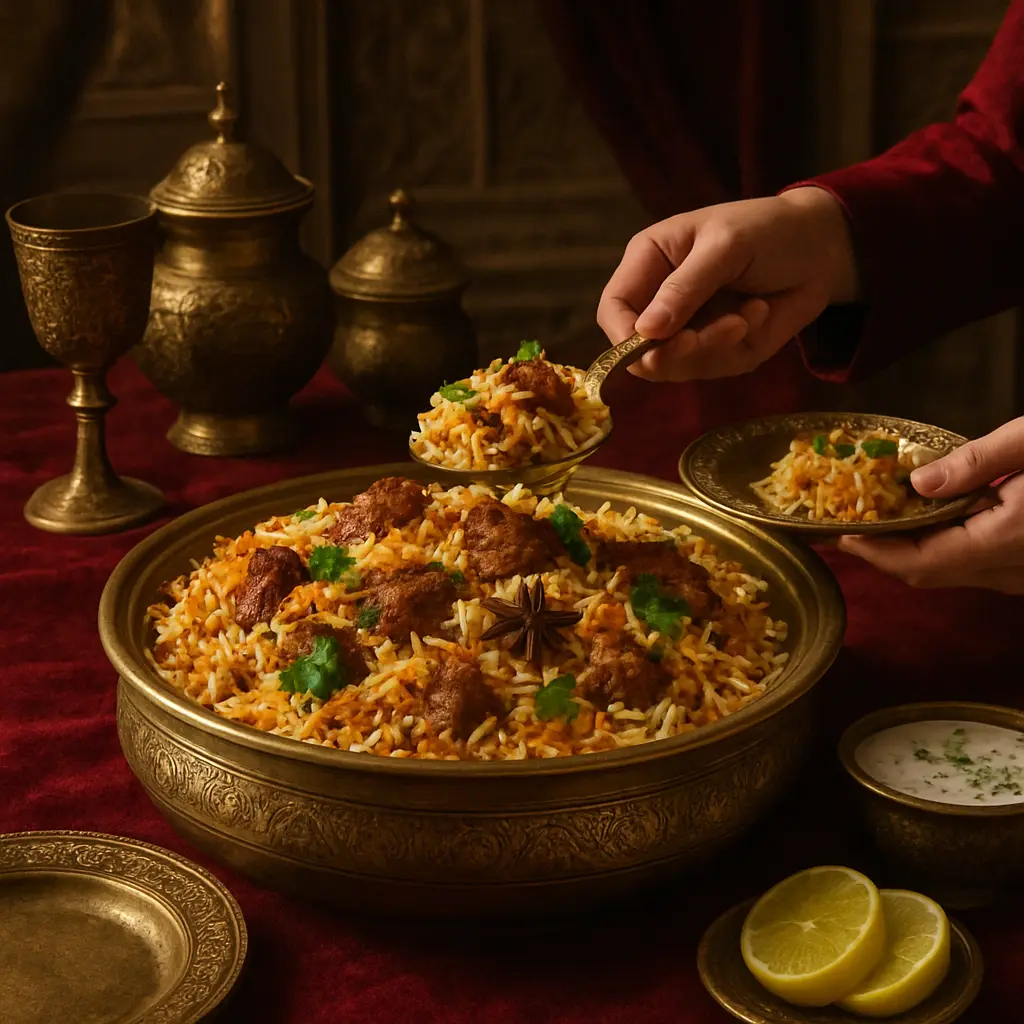
Biryani is more than just a dish; it’s a journey through time. Its rich history spans centuries and continents. From royal kitchens to street stalls, biryani has evolved remarkably. Each version tells a story of cultural exchange and culinary innovation.
The origins of biryani trace back to the Mughal era, where it was a royal delicacy. Over time, it has adapted to local tastes and ingredients. Today, biryani is a global favorite, with countless variations and recipes. Its evolution reflects the diverse culinary heritage of the Indian subcontinent.
Join us as we explore the fascinating journey of biryani, from its royal beginnings to its modern-day sizzles.
The Royal Origins: Biryani’s Birth in the Mughal Era
Biryani’s story begins in the opulent courts of the Mughal Empire. The Mughals, known for their indulgence in fine cuisine, introduced biryani to India. This dish was a luxurious treat, fit for emperors.
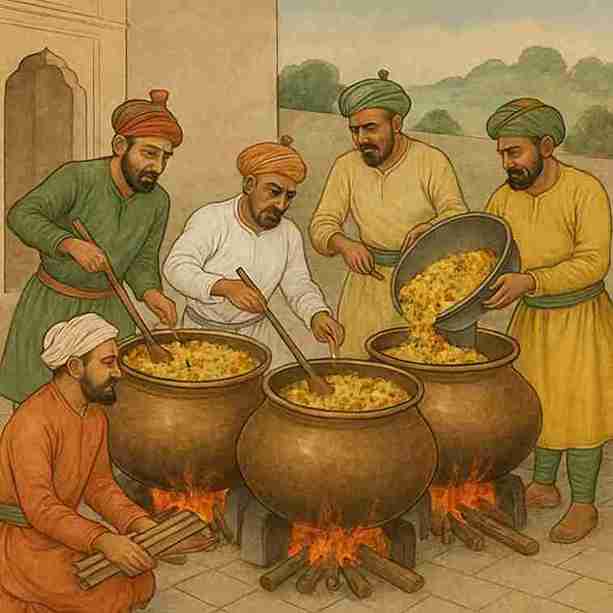
Mughal emperors adored biryani, making it a staple in royal banquets. The preparation was elaborate and required skilled chefs. Each ingredient was chosen with care to enhance the dish’s regal appeal.
Handis, large pots, were essential in cooking the biryani. The recipe called for slow cooking, ensuring rich flavors permeated the rice and meat. Spices like saffron, cardamom, and cloves added exotic aromas.
Key characteristics of royal Mughal biryani:
- Prepared in large handis for grandeur
- Use of aromatic spices for depth
- Slow-cooked for enhanced flavors
Over time, the tradition of cooking biryani spread throughout the empire. It quickly gained popularity beyond the palace walls. This propagation laid the groundwork for the dish’s evolution, leading to a plethora of regional variations.
The Mughal influence on biryani cannot be overstated. It reflects the intricate blend of culture and tradition. Their culinary legacy continues to inspire many biryani recipes today.
Persian Roots and the Journey to the Indian Subcontinent
Biryani’s story begins long before the Mughals introduced it to India. Its roots trace back to Persian cuisine. The word “biryani” itself comes from the Persian term “birian,” meaning “fried before cooking.”
In Persia, rice and meat dishes were already popular. Traders and travelers brought these culinary traditions to the Indian subcontinent. These dishes laid the groundwork for what would become biryani.
The Silk Route was a vital conduit, facilitating cultural exchanges. Along with goods, ideas flowed, influencing local culinary practices. Persian influences seamlessly blended with existing Indian flavors, resulting in biryani’s unique character.
The adaptation of Persian techniques in India was pivotal. Unlike its Persian predecessors, the Indian biryani incorporated diverse spices and methods. This new version appealed to local tastes while maintaining its exotic origins.
Biryani’s journey from Persia to India illustrates the dynamic interplay of cultures. It represents a fusion of flavors and practices, evolving over time. This blending of heritage continues to shape regional variations today.
The Dum Method: Traditional Techniques That Shaped Biryani

The dum method is pivotal in biryani’s preparation, offering a unique cooking technique. This method involves slow-cooking rice and meat together in a sealed pot, enhancing the dish’s aroma and flavor. The result is a mouthwatering symphony of spices and tender meat.
This traditional technique became prominent during the Mughal era. It allowed chefs to create aromatic delicacies in royal kitchens. The slow-cooking process melds spices and ingredients, making each biryani unique. Skilled chefs emphasize precise timing and temperature control for perfection.
Key steps in the dum process include:
- Layering partially cooked rice and marinated meat
- Sealing the cooking pot with dough or cloth
- Cooking on low heat, often using hot coals
The dum method is an art form, requiring patience and skill. This technique ensures a harmonious blend of flavors, with each grain of rice infused with spices. Its legacy continues in modern kitchens, preserving the historical essence of biryani.
Regional Biryani Varieties: A Culinary Map of India

India’s diverse culture has birthed a myriad of biryani varieties. Each region infuses its own flavors and ingredients, crafting unique culinary experiences. Understanding these varieties offers a flavorful journey through India’s gastronomic landscape.
Hyderabadi Biryani
Renowned for its spice and saffron’s golden hue. Known for its “kacchi” (raw) method, where raw marinated meat is layered with rice. The result is a rich and aromatic feast.
Kolkata Biryani
A legacy of the Nawabs of Bengal, distinguished by the inclusion of tender potatoes. Subtle, fragrant, and includes boiled eggs.
Lucknowi (Awadhi) Biryani
Celebrated for its refined use of spices. Prepared using the “pukki” method—meat and rice cooked separately then combined. Elegant and aromatic.
Other popular styles:
- Delhi Biryani: Mughal-influenced, less spicy
- Malabar Biryani: Tropical notes from Kerala
- Ambur Biryani: A Tamil Nadu specialty with a fiery kick
Each region’s biryani tells its own story, reflecting local history and culture. The variations showcase adaptability, creativity, and the rich tapestry of India’s culinary traditions.
Biryani Beyond Borders: Global Adaptations and Influences
Biryani has transcended borders, finding its place in kitchens worldwide. Its flavors have been embraced and adapted by various cultures, each adding a local twist.
In Pakistan, biryani enjoys immense popularity, often garnished with fried onions and boiled eggs, known for intense spices and generous meat.
In the Middle East, saffron and nuts elevate the dish with regional character and luxury.
Biryani’s global journey reflects cultural mingling and culinary innovation. Each adaptation brings something new while maintaining the essence of the dish.
Modern Biryani: Fusion, Innovation, and New-Age Recipes
Modern biryani showcases the dish’s adaptability to new tastes and diets. Chefs worldwide are reimagining biryani with diverse ingredients.
Innovative options include quinoa, brown rice, tofu, paneer, and global vegetables. Fusion biryanis bring unexpected flavors together.
Popular modern twists:
- Quinoa biryani
- Organic vegetable biryani
- Seafood biryani with prawns or salmon
- Kimchi biryani
- Biryani Sizzler
These creative renditions keep biryani exciting and relevant, blending tradition with contemporary cuisine.
The Art of Biryani: Spices, Skills, and Celebrations

The art of making biryani lies in balancing spices and mastering cooking precision. Aromatic spices like cardamom, cloves, and cinnamon define its taste.
Making biryani demands skill, patience, and experience. It is a revered dish often associated with festivals, weddings, and celebrations.
Essential elements include:
- Perfectly cooked rice
- Marinated meat or vegetables
- Fragrant spices and herbs
- Time-honored techniques
Biryani embodies culinary artistry and cultural heritage.
Biryani in Popular Culture and Everyday Life
Biryani holds a special place in movies, songs, and literature. It symbolizes warmth, togetherness, and festivity.
In daily life, biryani is a comforting meal—whether homemade or ordered. Its versatility makes it a beloved staple across cultures.
Conclusion: Biryani’s Enduring Legacy
Biryani’s journey from royal kitchens to global tables expresses its timeless charm. Rich flavors, deep history, and cultural significance make it more than a meal.
Its legacy lies in uniting people over taste and tradition. Whether classic or modern, biryani remains a symbol of pride and culinary artistry—destined to continue its flavorful legacy for generations.