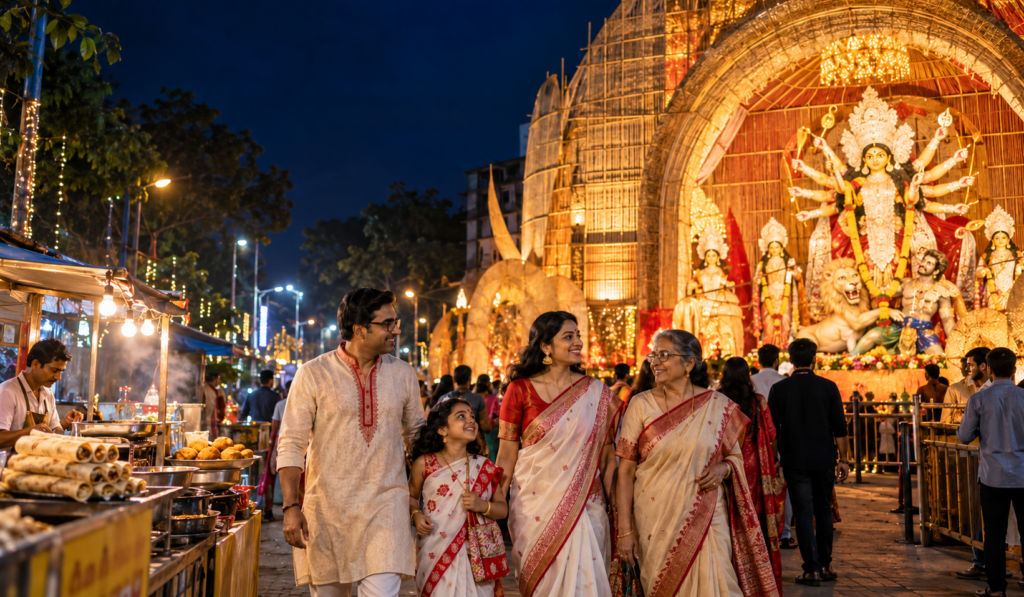
Durga Puja in Kolkata involves long walks, crowded streets, changing traffic routes and hours spent moving between pandals. Food naturally becomes part of the plan. A well-organised food trail gives you time to try Kolkata’s festive favourites without losing half the day in restaurant queues or feeling too full to continue walking.
The smartest approach is to divide Kolkata into zones, decide where you want a full meal and leave room for a few street-food breaks along the way.
Choose one part of Kolkata at a time
Trying to cover north Kolkata, central Kolkata, Salt Lake and south Kolkata in a single evening usually creates more travel than enjoyment. Traffic restrictions during Puja can make even a short road journey take much longer than expected.
Plan each outing around one area:
- North Kolkata for traditional neighbourhood pujas, old streets and classic food shops
- Central Kolkata for well-known pandals, markets and quick street-food options
- South Kolkata for large themed pandals and established dining areas
- Salt Lake and nearby areas for organised blocks, prominent pujas and comfortable meal stops
Once the pandals are grouped by location, choose a food stop that fits naturally between them. This avoids travelling across the city only for a particular dish.
Start with a light meal
Beginning a pandal-hopping session with a heavy meal can make the first few hours uncomfortable. A lighter breakfast or early snack works better when you expect to walk and stand in queues.
Tea, toast, kochuri, singara or a small plate of ghugni can provide enough energy without slowing you down. Carry water, especially when heading out during the warmer part of the day.
If your plan begins around lunchtime, make the full meal your first scheduled stop. Starting early can also help families avoid the busiest restaurant hours.
Decide where the main meal will fit
Every food trail needs one proper meal. Without a planned stop, people often keep eating snacks and then struggle to find a suitable restaurant when everyone is tired.
Choose lunch if you are starting your pandal route in the afternoon. Dinner works better for an evening or late-night outing. Families travelling with children or elderly members should reserve a table whenever the restaurant accepts advance bookings.
Keep at least 60 to 90 minutes for the meal. During Durga Puja, service and waiting times may be longer because restaurants handle larger crowds.
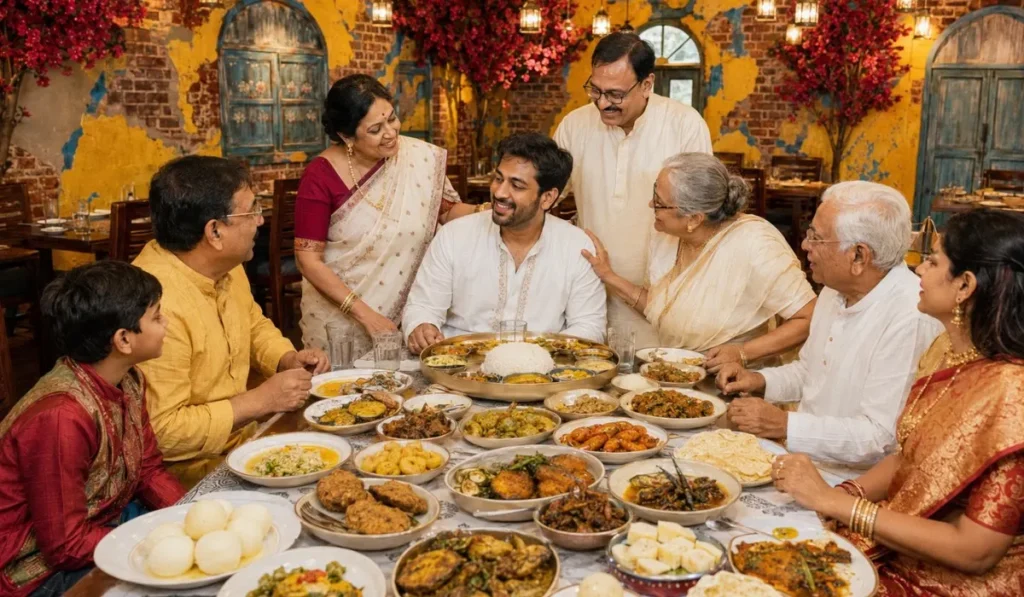
For a Bengali meal, consider dishes that provide variety without making the table unnecessarily large. Rice or pulao, dal, a vegetable preparation, fish or meat, chutney and dessert can create a complete meal. A thali may be more convenient when every diner wants several traditional items in manageable portions.
Those following a Salt Lake route can schedule lunch or dinner at a Bengali restaurant in Salt Lake Sector V before continuing towards nearby pandals. The location of the restaurant should support the route rather than force a long detour.
Use street food as short breaks
Street food suits the gaps between pandals. Kolkata offers plenty of options during Puja, but eating something at every stop can quickly become uncomfortable.
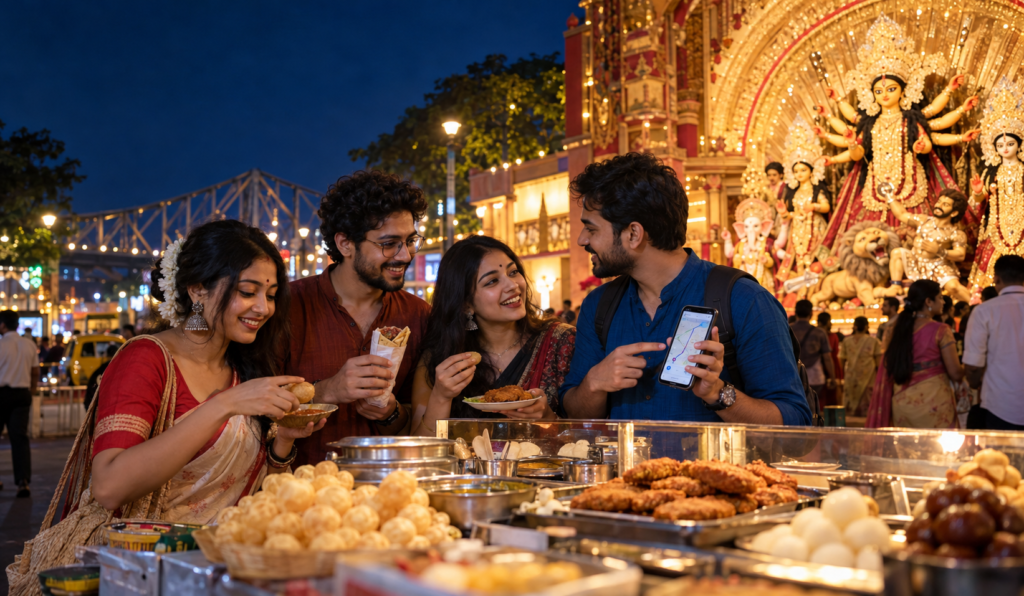
Choose two or three items across the entire route. Phuchka can work as an early-evening snack, while a roll, cutlet or plate of chow mein may suit a later break. Finish with mishti or kulfi if you still have room.
Look for stalls where food is prepared fresh and served hot. High customer turnover is usually preferable to trays of food that have been left uncovered for long periods. If a stall looks poorly maintained, move on. There will be another option nearby.
Carry tissues and hand sanitiser, and avoid sharing drinking water from open containers.
Keep bhog separate from the commercial food trail
Many community pujas distribute bhog, commonly including khichuri, labra, fried vegetables, chutney and payesh. Bhog has a religious purpose and should be received respectfully.
Check the serving time in advance because distribution may take place during a limited period. Follow the organisers’ instructions, accept a reasonable portion and avoid wasting food.
A restaurant thali and Puja bhog may include some similar items, but they are different experiences. Bhog is connected with the ritual offering. Restaurant food and street food belong to the wider social celebration around Puja.
Plan for different age groups
A food trail for a group of friends can remain spontaneous. A family outing requires more structure.
Older family members may need seating, cleaner washrooms and shorter walking stretches. Children may become tired or hungry before the planned meal. Carry a simple snack for them instead of relying entirely on crowded stalls.
Before finalising the restaurant, check whether it has comfortable seating, vegetarian choices and food suitable for children. If anyone has an allergy or dietary restriction, communicate it clearly when ordering.
A long Puja outing becomes easier when the group agrees on the meal plan before leaving home.
Leave space between eating and walking
Do not schedule a heavy meal immediately before entering a long pandal queue. Allow 20 to 30 minutes to rest, use the washroom and reorganise the route.
Comfortable footwear matters as much as restaurant planning. Kolkata’s Puja food trail involves far more walking than most people expect. Tight schedules also create unnecessary pressure, especially when queues change throughout the evening.
Treat the route as flexible. If one area becomes too crowded, shorten the list rather than rushing through every pandal.
Check practical details before leaving
Traffic restrictions, Metro timings, parking availability and pandal entry arrangements can change during the festival. Confirm the latest information on the day of your outing.
Save restaurant numbers, route maps and booking details on your phone. Carry a power bank because navigation, photographs and calls can drain the battery quickly.
It also helps to agree on a meeting point in case group members become separated in a crowded area.
Build the trail around comfort
A good Puja food trail balances pandals, walking and meals. Select one part of the city, reserve one main dining stop and keep street-food tasting limited to a few dishes you genuinely want to try.
This structure leaves enough room for unexpected discoveries, whether it is a neighbourhood pandal, a small sweet shop or a food stall with a long local following. The aim is to enjoy Kolkata’s Durga Puja without turning the day into a race between locations.